Ghost Newsletter Promotion: Turn Each Issue Into a Week of LinkedIn and X Content
If you publish in Ghost and want your newsletter to do more than sit in inboxes, the practical move is to repurpose each issue into social posts after you send it. Letterflow is built for that workflow: start from the finished newsletter, generate LinkedIn and X drafts, edit them, and schedule them without rebuilding the same ideas from scratch.
Letterflow Editorial Team
July 29, 2026 · 4 min read
The short version
If you run your newsletter on Ghost, the promotion problem is usually not “How do I write more?” It is “How do I get more mileage from the issue I already finished?” That is the fit for Letterflow. It starts with the actual newsletter, then turns that source into social drafts you can edit and schedule. For Ghost writers, that matters because Ghost handles publishing the newsletter well enough; the missing layer is usually post-send distribution. Letterflow is that layer when you want LinkedIn and X to work off the same thinking that went into the issue itself.
- Start from the published Ghost issue, not a blank prompt or a separate content brief.
- Generate LinkedIn and X drafts plus subject lines and quote snippets from one source.
- Edit, regenerate, publish, and schedule in a workflow designed for newsletter-first promotion.
The right starting point is the issue you already wrote, not a blank post window.
How the workflow works in practice
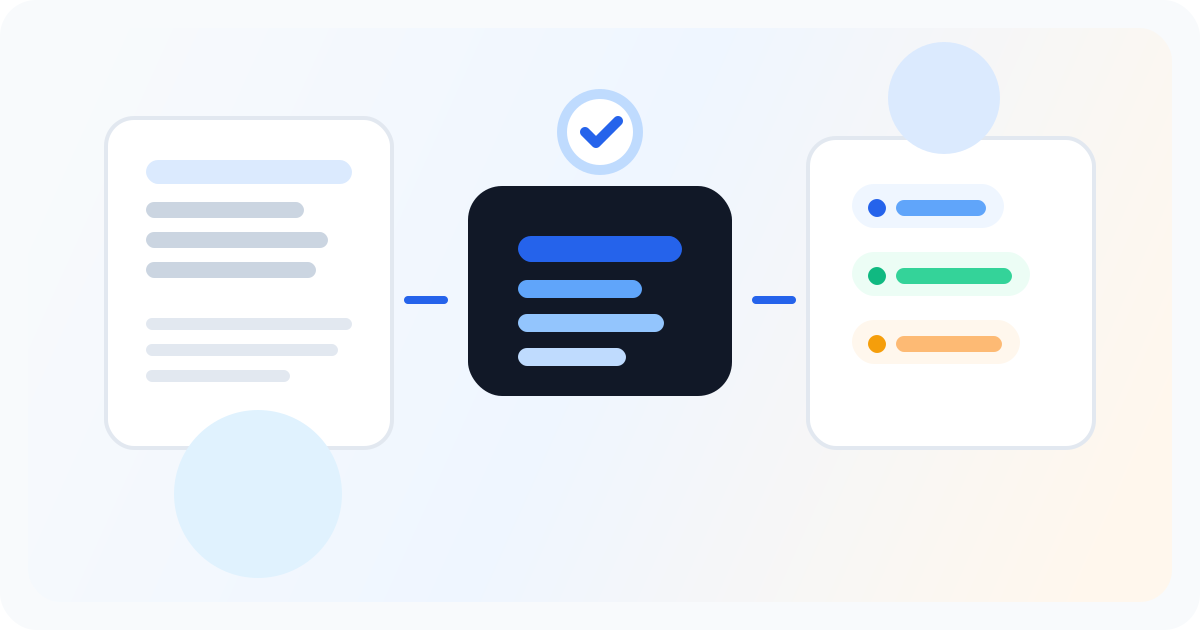
The basic motion is simple. You finish a Ghost issue, send it, then use that issue as the source for social promotion. Letterflow is built around that sequence. Instead of asking you to write a new set of posts from scratch, it lets you repurpose the newsletter you already wrote into platform-ready drafts for LinkedIn and X. That keeps the logic aligned: the social posts come from the same argument, example, or takeaway that made the newsletter worth sending in the first place. That matters because newsletter writing and social writing are not identical jobs. A newsletter can carry more setup, more context, and more nuance. A LinkedIn post usually needs a cleaner hook and a tighter argument. An X post may need a sharper angle, a shorter line, or a more quotable sentence. Letterflow’s role is to bridge that gap without pretending the formats are the same. You still review the drafts. You still adjust tone and emphasis. But the starting point is a finished issue, which is the part most Ghost writers already did well. The practical version looks like this: send the Ghost issue, pull out the strongest idea clusters, generate first-pass posts in your voice, edit anything that feels too generic, then schedule the promotion so the issue keeps moving after launch day. That is a very different workflow from opening a social scheduler and staring at an empty box. For newsletter writers, the blank box is usually the wrong problem.
Stop writing social posts from scratch
Letterflow turns one newsletter into a week of platform-ready content so your promotion starts with the writing you already trust.
Start free trialThe fit, the limits, and the tradeoffs
- Letterflow makes sense when your newsletter is the primary source of truth and social is a distribution layer. If you already wrote the issue, repurposing is faster and usually better than reconstructing the same ideas manually.
- It is not the best answer if your main job is managing a broad social calendar with many unrelated inputs. Queue-first schedulers are broader there, even if they are shallower for newsletter promotion.
- The voice profile feature matters if you publish often and want drafts that sound closer to your existing posts and newsletter archive. It reduces the ‘generic AI’ feel, but it does not remove editing work.
- The honest limitation: Letterflow is useful because it starts from the newsletter and moves into promotion. It is not meant to replace the thinking, sourcing, or editorial work that goes into the issue itself.
Bottom line
If you publish a Ghost newsletter and your social promotion still starts in a blank composer, you are making the hard part harder than it needs to be. The cleaner workflow is to let the issue do the heavy lifting, then repurpose it into LinkedIn and X drafts that can carry the send forward. That is where Letterflow is a real fit. It is a promotion layer for writers who already have the newsletter, already have the ideas, and just need those ideas turned into posts that can be edited, scheduled, and published without starting over.