Newsletter Promotion Strategy 2026
A practical newsletter promotion strategy for 2026: turn each issue into useful social content, build a repeatable cadence, and stop relying on one announcement post.
Letterflow Editorial Team
April 26, 2026 · 8 min read
The old strategy was one link post
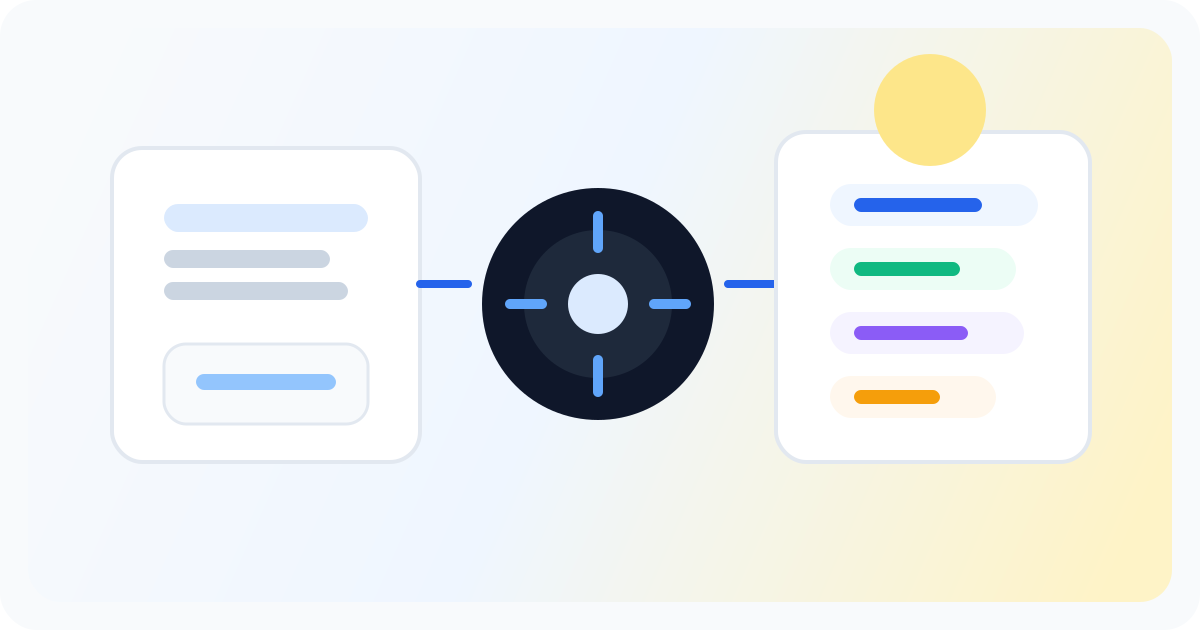
For a long time, newsletter promotion meant publishing the issue, writing one social post that said the issue was live, and hoping the right people clicked. That strategy is too thin now. Feeds move quickly, readers need a reason to stop, and most people will miss any single post you publish.
- One announcement post gives the issue only one chance to travel.
- A link without a useful idea rarely earns attention from new readers.
- The newsletter itself usually contains more promotion material than the announcement uses.
A newsletter promotion strategy works when every issue creates several useful entry points, not one lonely link post.
Start with the issue as the source asset
A better 2026 newsletter promotion strategy starts with the finished issue. Read it like source material. The strongest claim, best example, useful quote, personal story, and practical takeaway can each become a different promotion asset.
- Pull out one main claim for a LinkedIn post.
- Turn tactical lessons into shorter X posts.
- Use strong lines as quote graphics or pull quotes.
- Use the issue's promise to write better email subject line variations.
Stop writing social posts from scratch
Letterflow turns one newsletter into a week of platform-ready content so your promotion starts with the writing you already trust.
Start free trialRelated product pages
Build a simple promotion cadence
The goal is not to spam every channel. The goal is to give the same issue several natural entry points across the week. Each post should stand alone, deliver value, and make the full issue feel like the next useful step.
- Day 1: publish the strongest idea or clearest opinion from the issue.
- Day 2 or 3: share one practical lesson that works without extra context.
- Day 4 or 5: publish a story, quote, or mistake that points back to the issue.
- End of week: reuse the best-performing angle in your next newsletter planning.
Match each platform to a different job
LinkedIn and X should not receive the exact same post. LinkedIn can carry a little more setup, context, and argument. X works better when the idea is compressed into a single sharp point. Email subject lines and quotes have their own jobs too.
- Use LinkedIn for context, authority, and a fuller idea.
- Use X for compact takeaways, contrast, and curiosity.
- Use subject lines to test the promise of the issue.
- Use pull quotes to make the strongest language easier to share.
Measure the real bottleneck
If your issue is strong but the promotion rarely happens, the bottleneck is not strategy. It is production. You need a repeatable way to turn the issue into drafts while the topic is still fresh and while you still have energy to edit.
- Track time from publish to first social post.
- Track how many distinct angles each issue produces.
- Track which posts earn clicks, replies, saves, or new subscribers.
- Use those signals to plan future issues and future promotion.
Where Letterflow fits
Letterflow fits when the newsletter is already written and the promotion step keeps getting delayed. It uses the issue as the source, turns it into platform-ready drafts, and keeps editing, scheduling, and publishing close to the same workflow.
- Use it when you want several social angles from one issue.
- Use it when you need social drafts that stay close to your voice.
- Use it when a newsletter promotion strategy needs to become a weekly habit.