How To Repurpose A Newsletter Into LinkedIn Posts
A practical workflow for turning one newsletter issue into several LinkedIn posts without flattening the original point of view.
Letterflow Editorial Team
March 15, 2026 · 8 min read
Start with the full context
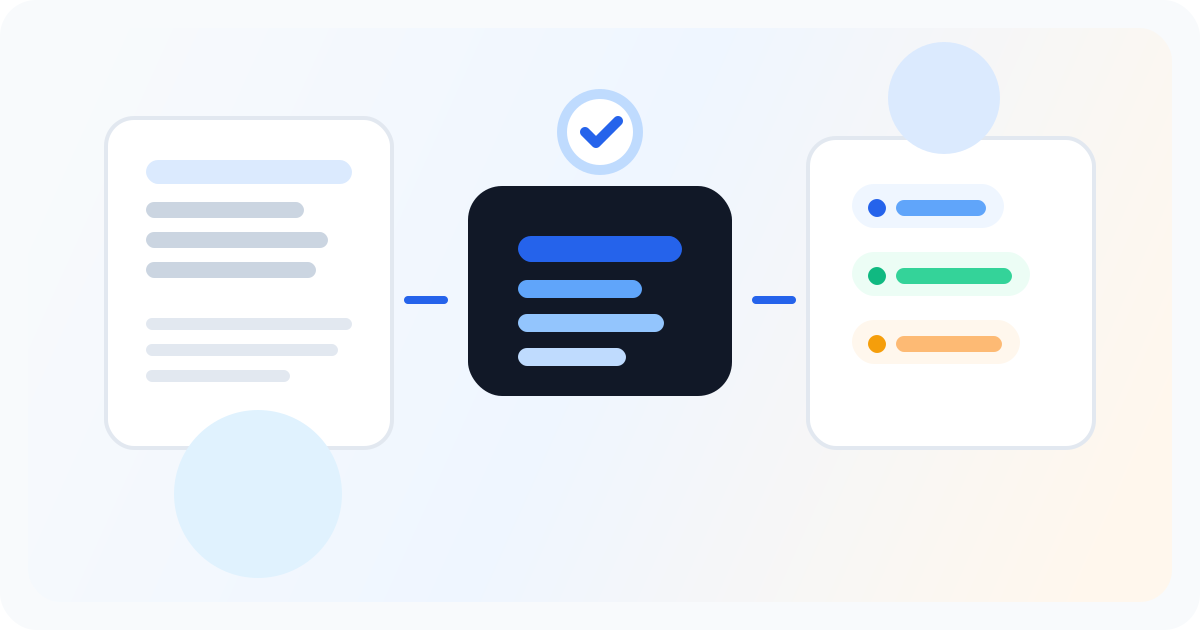
Most weak LinkedIn repurposing comes from asking AI to summarize too early. You get better posts when the model can see the whole issue, including the setup, argument, and strongest phrasing.
- Paste the whole newsletter, not just a headline or abstract.
- Pull out the one or two ideas that can stand alone in the feed.
- Keep the original tension or insight instead of reducing everything to tips.
Your newsletter is already the strategy. Repurposing works best when promotion starts with the full idea, not a blank prompt.
Generate multiple angles
One issue usually contains more than one viable LinkedIn post. A strong workflow produces several options so you can choose between a story-led opening, a sharp opinion, or a tactical takeaway.
- Use different hooks for different audience segments.
- Let one issue power several posts across the week.
- Treat the newsletter as a content source, not as a single social draft.
Stop writing social posts from scratch
Letterflow turns one newsletter into a week of platform-ready content so your promotion starts with the writing you already trust.
Start free trialRelated product pages
Give each post one complete job
Do not split the newsletter by paragraph and call each fragment a post. Build each LinkedIn draft around one complete idea that makes sense without the reader seeing the original issue.
- Use the main argument for an opinion-led post.
- Turn a supporting example into a short story or lesson.
- Use a framework or process as a practical standalone post.
Edit for LinkedIn reading behaviour
The newsletter gives you the substance, but LinkedIn still needs feed-aware shaping. The best edits usually tighten the opening, shorten dense paragraphs, and add a clearer invitation to read more.
- Lead with tension or contrast in the first lines.
- Break up long paragraphs before publishing.
- Preserve your natural tone instead of making it sound more generic.
Know when this workflow is a poor fit
Repurposing cannot rescue an issue with no clear idea, and it should not turn private reader material into public content without permission. Start with a finished newsletter whose claims and examples are safe to publish elsewhere.
- Do not republish confidential reader replies or customer details.
- Rewrite context that only makes sense to existing subscribers.
- Skip weak angles rather than filling an arbitrary post quota.