Founder Operator Newsletter Promotion Without a Content Team
If your newsletter is the real source of your thinking, social promotion should follow that work, not compete with it. This draft explains a founder-operator newsletter promotion workflow that starts from the finished issue, turns it into LinkedIn and X drafts, and gives you a practical way to publish more without hiring help or rewriting the same ideas twice.
Letterflow Editorial Team
August 19, 2026 · 5 min read
The short version
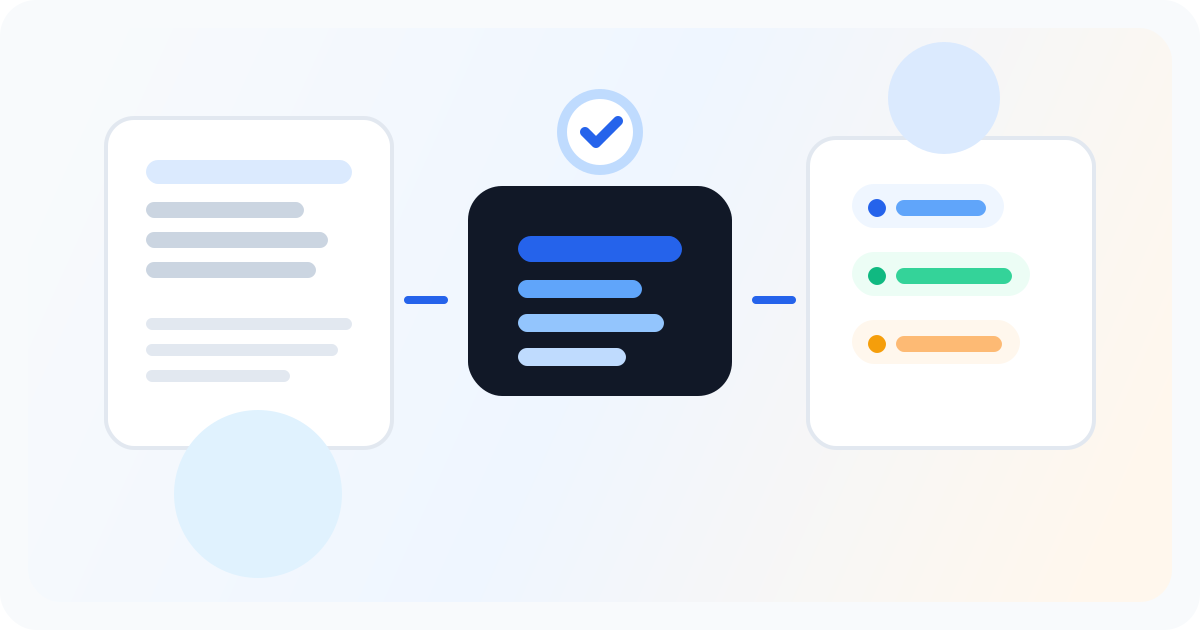
The cleanest founder-operator newsletter promotion workflow does not start with a blank social prompt. It starts with the issue you already wrote. That matters because the newsletter is usually where the real thinking lives. The social posts are just distribution. When you reverse that order, you end up spending time inventing angles, rewriting the same ideas, and trying to keep up with platforms that were never the main asset in the first place. Letterflow is built for the newsletter-first version of that job. You start from the finished newsletter, turn it into LinkedIn posts, X posts, subject lines, and quote snippets, then edit, regenerate, publish, or schedule in one workflow. For founder-operators, that is the actual use case: one person doing the writing, the promotion, and the distribution, without pretending a content team exists. The point is not to replace judgment. The point is to make promotion follow the work you already finished, so every issue has a real chance to travel beyond the inbox.
- Start from the finished newsletter, not a blank prompt.
- Generate social drafts that fit LinkedIn and X promotion.
- Edit and schedule in the same workflow, without building a second content system.
The newsletter is already the hard part. Promotion should come from it, not sit beside it as a second writing job.
How the workflow works when you are the whole marketing team
For a founder-operator, the main problem is not ideas. It is translation. You already have the source material: a finished newsletter with an argument, a point of view, a product lesson, or a customer insight. The work is turning that source material into posts that people will actually see on LinkedIn and X, without spending another hour pretending to brainstorm. Letterflow solves for that specific handoff. You bring in the newsletter issue, and it generates promotion assets from the actual text. That includes LinkedIn posts, X posts, subject lines, and quote snippets. The workflow is built around repurposing, which means you are not asking the tool to invent your voice from nothing. You are giving it the thing you already wrote and then shaping the output into something publishable. That difference matters because founder-led businesses usually need speed more than volume. You do not need 40 generic social ideas. You need a reliable way to turn one issue into a week of promotion that sounds like the same person who wrote the newsletter. If you publish weekly or more, that becomes a repeatable operating habit, not a special project.
Stop writing social posts from scratch
Letterflow turns one newsletter into a week of platform-ready content so your promotion starts with the writing you already trust.
Start free trialRelated product pages
Tradeoffs worth thinking about before you pick a tool
- If your main job is broad social scheduling, a general queue-first scheduler may still be the simpler choice. Letterflow is not trying to be the most general calendar for every platform, it is trying to be the better repurposing workflow for newsletter-led promotion.
- If you live inside LinkedIn and want a tool that is primarily about LinkedIn growth, a LinkedIn-heavy product like Taplio can be a better fit. Letterflow is narrower by design, because it starts from the newsletter and carries that source forward.
- If your workflow is mostly X automation and you do not care about the newsletter source step, an X-focused tool like Hypefury may suit you better. Letterflow is strongest when the newsletter already exists and promotion should come after it.
- The honest win for Letterflow is not that it replaces every social tool. The win is that it removes the blank-page step for people who already did the hard part. You can also train a voice profile from past posts and newsletters, then use that to keep drafts closer to how you already write. But that still does not make it magic. You will want to review, edit, and choose what to publish. That is the right amount of control for founder-operators who care about quality and do not have time for a second writing process.
Bottom line
If you are a founder-operator promoting a newsletter-led business, the real question is simple: do you need another general social tool, or do you need a workflow that starts where your actual work already lives? If the newsletter is the source, Letterflow is a practical fit. It is especially useful when the newsletter is already written and the remaining job is distribution. Start from the issue, turn it into LinkedIn and X drafts, edit what matters, and schedule the rest. That is a real operating system for small teams, not a content theory exercise.