Newsletter Promotion Without Starting From Scratch: A Creator's Workflow
If you already wrote the newsletter, the hard work is done. This guide outlines a practical workflow for turning one finished issue into a week of social promotion, without staring at a blank page.
Letterflow Editorial Team
August 21, 2026 · 5 min read
The short version
The most common point of failure in newsletter promotion is the starting line. After spending hours writing, editing, and publishing a newsletter, the idea of starting over with a blank social media composer is exhausting. It leads to inconsistent promotion or, worse, no promotion at all. The solution isn't to work harder; it's to change the workflow. A newsletter-first approach treats your published issue as the single source of truth. Instead of inventing new hooks and angles from scratch, you extract and adapt the ideas you've already developed. This method turns the daunting task of 'creating social content' into a more manageable process of editing, refining, and scheduling.
- Start with your finished newsletter issue as the only source material required.
- Use a purpose-built workflow to generate post drafts for LinkedIn and X directly from your issue's text.
- Shift your work from writing to editing, then schedule a week of promotion in one continuous session.
If you already wrote the newsletter, you already did the hard work. Promotion shouldn't feel like starting a second writing job from a blank page.
The Practical Workflow: From Published Issue to Scheduled Posts
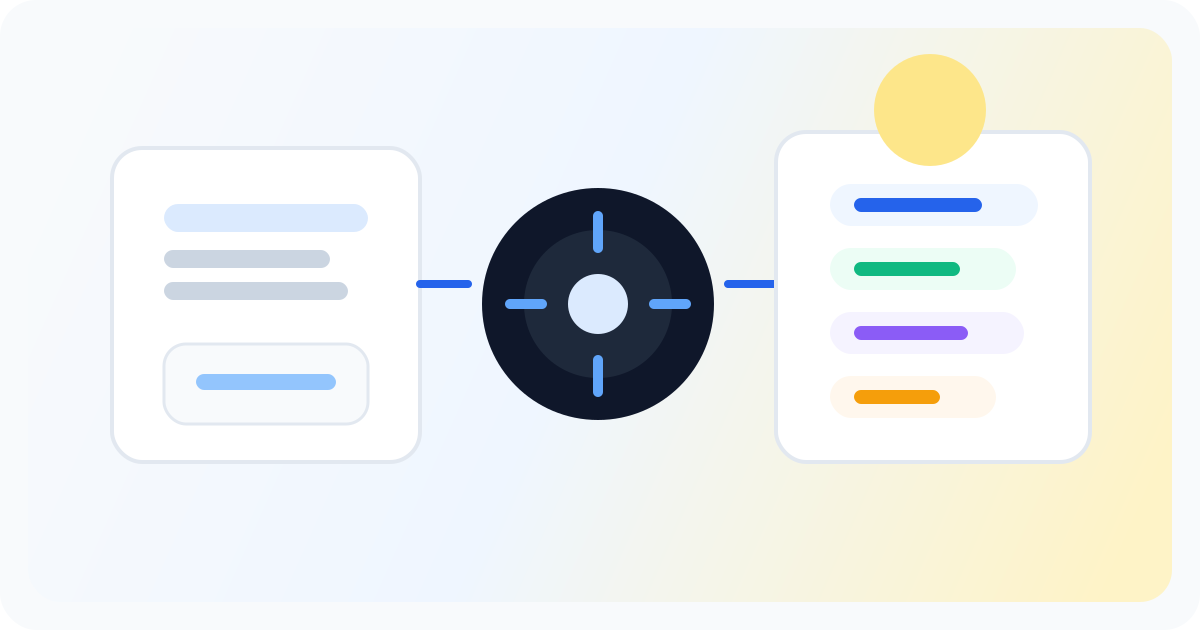
The entire process hinges on a simple but powerful shift: your newsletter is not just a finished product, it's the raw material for your promotion. The workflow begins the moment you hit 'publish' on your issue. Instead of opening up a scheduler and thinking, 'What should I post today?', you start by feeding your newsletter content into a system designed to understand it. In Letterflow, this means pasting the text of your issue into the workspace. This single action provides the context that generic AI tools and blank-slate schedulers lack, ensuring that every promotional asset is directly tied to the core message you just finalized. Once your newsletter content is loaded, the creative work becomes a process of curation and refinement, not creation from zero. The system generates a variety of assets based on your text: potential LinkedIn posts, X threads, quote graphics, and even alternative subject lines. This is where a trained voice profile becomes critical. By analyzing your past writing, Letterflow produces drafts that match your tone, style, and vocabulary. Your job transforms from 'writer' to 'editor'. You can review the suggestions, regenerate options you don't like, tweak a hook for a specific platform, or combine ideas into a new post. This step is about exercising your judgment, not your ability to fill a blank page under pressure. With a batch of refined posts ready, the final step is to schedule them. A connected workflow allows you to move directly from editing to publishing without exporting text or switching between apps. You can sequence your posts over the following week, for example, starting with a broad hook on LinkedIn, followed by a specific data point on X the next day, and a compelling quote later in the week. By handling generation, editing, and scheduling in one place, you eliminate the friction that causes so many creators to abandon their promotion plans. The entire cycle, from a finished newsletter to a fully scheduled week of social content, can be completed in minutes.
Stop writing social posts from scratch
Letterflow turns one newsletter into a week of platform-ready content so your promotion starts with the writing you already trust.
Start free trialBottom line
Promoting your newsletter shouldn't require you to run a second, parallel content operation. The most sustainable and effective strategy is one that builds directly on the work you've already completed. By starting from your finished newsletter, you ensure your social media presence is authentic, consistent, and directly supportive of your primary goal: growing your readership. This newsletter-first approach is designed for independent writers, founder-operators, and small teams who value efficiency and coherence. It turns promotion from a creative burden into a systematic process of distribution. You did the hard work of writing the issue; now you can use a workflow that respects that effort and multiplies its impact.