Building a Social Distribution System for Your Newsletter
Most newsletters die in the inbox. A social distribution system turns each issue into a week of promotion. This guide outlines a repeatable workflow for turning your finished newsletter into consistent social content for LinkedIn and X.
Letterflow Editorial Team
August 26, 2026 · 6 min read
The short version
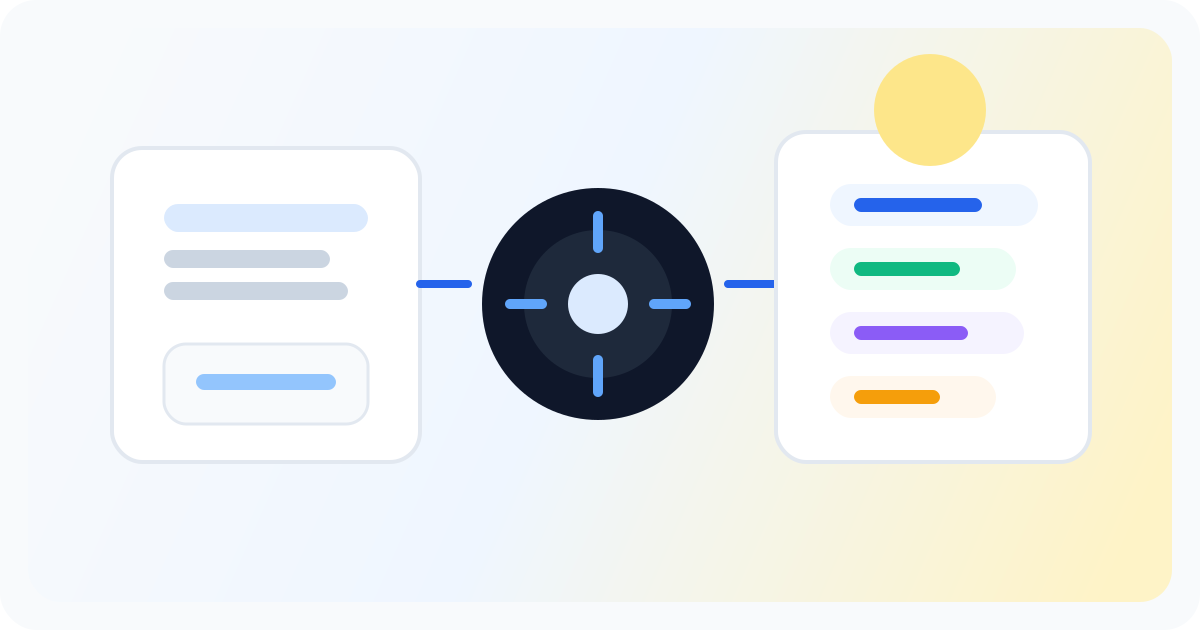
For most newsletter writers, social media feels like a second, unpaid job that competes with the real work of writing the newsletter. A better approach is to build a distribution system. Instead of creating net-new content, a system gives you a repeatable process for turning each finished newsletter into a week's worth of high-quality promotion for LinkedIn and X. This puts the focus back where it belongs: on the content you already created.
- Start with your published newsletter as the single source of truth for all promotional content.
- Generate a variety of social post drafts (LinkedIn posts, X threads, quote snippets) directly from that source.
- Edit, schedule, and analyze the performance of those posts to learn what works and refine your process.
Your social media plan should not be a second full-time job. It should be a system that runs on the work you already finished: the newsletter.
Choosing the Right Tools for Your System
- Newsletter-First Tools vs. Generic Schedulers: Standard social schedulers are built for one job: queuing content you have already written. They are effectively empty calendars waiting for you to fill them. They do not solve the actual bottleneck for most creators, which is creating the content in the first place. A newsletter-first system starts much earlier. It helps you generate the posts you need to schedule, using your newsletter as the foundation. It is a content creation workflow, not just a publishing utility.
- Repurposing vs. Platform-Specific Power Tools: Tools like Taplio or Hypefury are designed for power users of a specific platform (LinkedIn or X, respectively). They are great if your goal is to generate a high volume of content from many different sources and optimize for platform-specific growth hacks. A newsletter distribution system serves a different purpose. It is for creators whose primary asset is their newsletter. The system's goal is to effectively distribute that single asset to grow its audience, not to dominate a specific social media algorithm. The newsletter remains the center of gravity.
- The Practical Role of Voice Profiles: A modern distribution system uses AI to accelerate drafting, but the quality of the output depends entirely on the input. Starting from your newsletter is far more effective than a generic prompt because the context is already there. Taking it a step further, training a voice profile on your archive of past writing allows the AI to generate drafts that more closely match your unique style and tone. This is not an autopilot. It is a powerful assistant that produces better first drafts, reducing your editing time and ensuring the repurposed content feels authentic.
- Why Integrated Analytics Matter: A system needs a feedback loop to improve. Publishing posts into the void is not a system, it is just a routine. To make your distribution efforts smarter over time, you need to know what is actually working. Which hooks generate the most engagement? Do LinkedIn posts drive more clicks back to your newsletter than X threads? A workflow that syncs social analytics directly back into your workspace closes this loop. It allows you to connect specific posts to performance metrics without constantly switching between tabs, turning raw data into actionable insights to refine your next batch of content.
Bottom line
An effective social distribution system is not about creating more content. It is about getting significantly more value from the high-effort content you already produce: your newsletter. By building a repeatable process that begins after you send your issue, you can promote your best work with consistency and quality, avoiding the burnout that comes from treating social media as a separate, full-time endeavor. This approach is built for founder-operators, solo creators, and tiny teams where time is the most valuable resource. It ensures your promotional efforts directly support your primary asset. If the goal is to grow your newsletter, then your social workflow should start with it, every single time.