Strategy

Social Schedulers Alternative for Newsletter Promotion: When the Queue-First Approach Falls Short

Generic social schedulers queue posts you already wrote. If your newsletter is the source, not the afterthought, you need a different workflow. Here's where most scheduling tools stop and where Letterflow fits.

L

Letterflow Editorial Team

April 14, 2026 · 4 min read
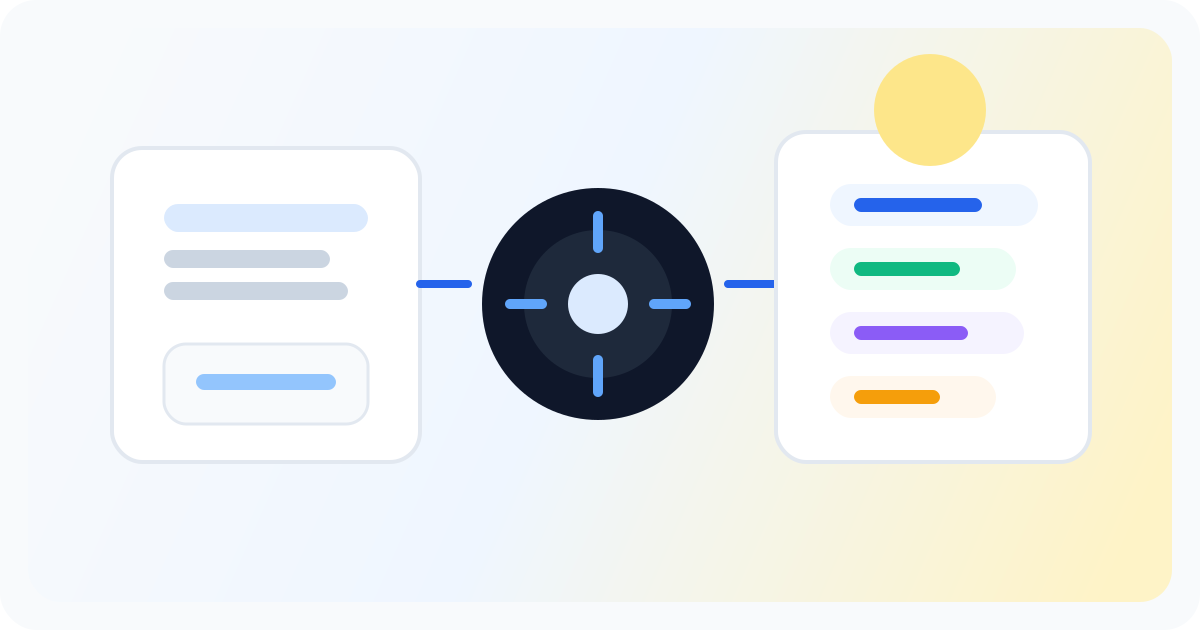
Editorial illustration showing a newsletter distribution strategy workflow across channels.

The queue-first assumption that breaks newsletter promotion

Social schedulers are built around a simple premise: you write content, then you schedule it. You open the calendar, drag posts into slots, and move on. That workflow works fine when you're creating social content directly in the tool or copying drafts in from wherever. Newsletter promotion doesn't follow that pattern. You wrote the issue. You sent it to your list. Now you need to pull promotion out of content that already exists. Generic schedulers don't have a good answer for that. They give you a blank post composer and a calendar. The work of turning one newsletter into a week of promotion still falls on you.

  • Most schedulers start from an empty compose box, not from existing content.
  • Queue-first tools help you organize posts you've already written, not generate them from source material.
  • The newsletter promotion workflow is extract-then-publish, not write-then-queue.

Most social schedulers assume you wrote the post first and queued it later. Newsletter promotion inverts that—you wrote the issue, now extract the promotion from it.

What newsletter-first promotion actually requires

When your newsletter is the source material, your promotion workflow has different demands. You need to pull key points, reframe them for different platforms, match your existing voice, and sequence posts across days—not dump a link into a queue. This means your tool needs to understand the relationship between the long-form issue and the short-form posts. It needs to generate first drafts that sound like you, not generic AI output. And it needs to get that content into publishing-ready shape without requiring you to rewrite everything from scratch. Generic schedulers handle none of that natively. They're calendar tools with post composers attached. They move content around. They don't generate it from your source material or maintain your voice in the output.

  • Newsletter promotion needs extraction, not just scheduling.
  • Voice consistency matters when your audience already knows your writing style.
  • Sequencing promotion across platforms and days requires more than a queue.

Stop writing social posts from scratch

Letterflow turns one newsletter into a week of platform-ready content so your promotion starts with the writing you already trust.

Start free trial

Where Letterflow fits newsletter promotion

Letterflow is built around the newsletter-first repurposing workflow. You write the issue, then generate LinkedIn posts, X posts, subject lines, and quote snippets from that one draft. The tool trains on your past posts and newsletters so the generated content sounds like your voice, not a generic AI template. From there, you edit, regenerate, publish, and schedule directly from the workspace. LinkedIn and X analytics sync back in. You stay in one flow from source material to published promotion. This isn't a replacement for every scheduling need. If you're mixing in non-newsletter content, curating from multiple sources, or running multi-channel campaigns beyond promotion, a broader scheduler may still make sense. But when your newsletter is the engine and social promotion is the output, Letterflow handles the workflow that generic schedulers leave blank.

  • Generate LinkedIn posts, X posts, subject lines, and quotes from one newsletter issue.
  • Train a voice profile from your past posts and newsletters for first drafts that match your style.
  • Edit, regenerate, publish, and schedule without switching tools or rebuilding from scratch.

When a generic scheduler still makes sense

Honest recommendation matters here. If your publishing workflow starts from a blank slate more often than not, if you're curating content from multiple sources, or if your social strategy doesn't center on newsletter promotion, a queue-first scheduler may serve you better than Letterflow. Tools like Hypefury excel at X automation and broad scheduling features. Taplio offers a LinkedIn-heavy workflow that works for creators pulling from multiple content streams. These tools don't start from newsletter source material, but they don't pretend to. The comparison only favors Letterflow when your newsletter is genuinely the source and your promotion is genuinely the output. If that's your workflow, the fit is real. If it isn't, pick the tool that matches how you actually work.

  • Queue-first schedulers work well for multi-source content strategies.
  • Hypefury is strong for X automation without newsletter integration.
  • Taplio fits LinkedIn-heavy creators who aren't newsletter-first.
L

Letterflow Editorial Team

Newsletter growth and workflow research

The Letterflow editorial team researches newsletter workflows, creator operations, and repurposing systems so every guide stays practical.

Frequently asked questions

Common questions

How is Letterflow different from a social scheduler for newsletter promotion?

Most schedulers start from a blank compose box and help you organize posts you've already written. Letterflow starts from your newsletter issue and generates the social promotion from that source material. It also trains on your voice so the output matches how you actually write, not generic AI output.

Can I use Letterflow alongside a generic scheduler?

Yes. If you have non-newsletter content in your queue, you can handle that in a scheduler and use Letterflow specifically for newsletter-first promotion. The tools serve different parts of the workflow rather than covering identical ground.

Does Letterflow replace the calendar and scheduling features I already use?

Letterflow handles publishing and scheduling for LinkedIn and X within its workspace. If you need to manage a broader calendar with non-newsletter content or cross-platform scheduling beyond LinkedIn and X, you may still want a dedicated scheduler for those tasks.

What if I'm not publishing a newsletter weekly or more?

Letterflow's strongest fit is creators publishing regularly enough to maintain a voice profile and extract consistent promotion. If you're publishing sporadically or not leading with a newsletter, a queue-first scheduler may be a better daily driver.