Social Schedulers Are Built for Queues. Newsletter Writers Need Something Different.
Most social schedulers start with a blank post and let you queue it. If your real work is the newsletter, that flow breaks. Here's what newsletter-first promotion actually looks like.
Letterflow Editorial Team
May 18, 2026 · 4 min read
The short version
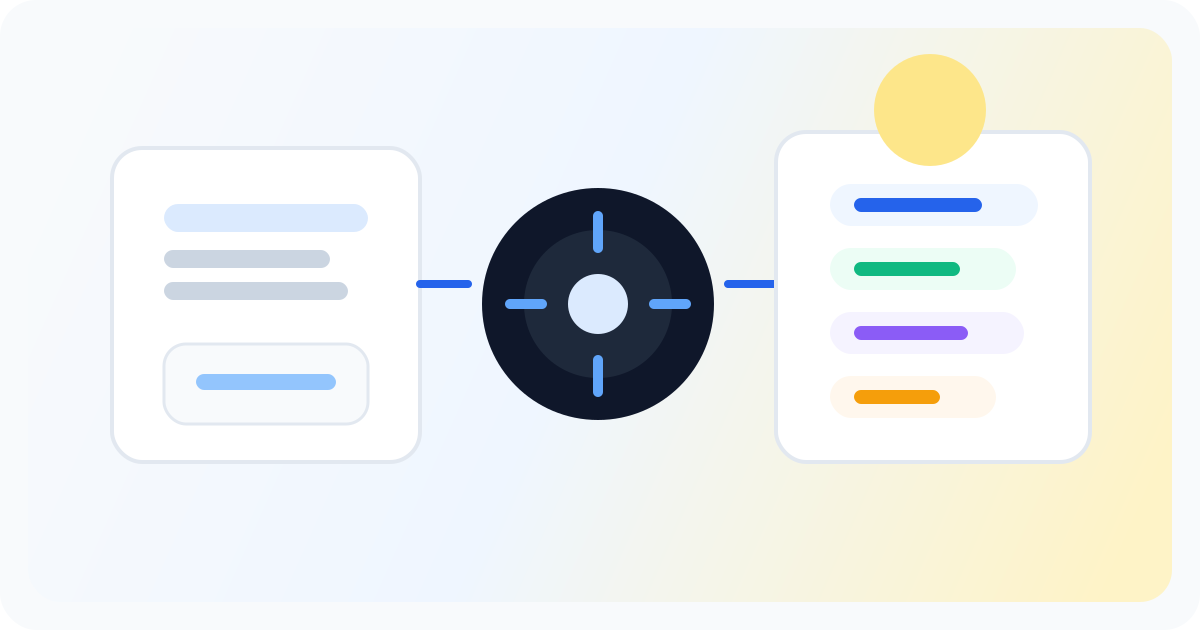
Most social schedulers are queue-first tools. They assume you're building posts in isolation or following a content calendar. That works fine if you're a brand manager planning topics weeks in advance. It falls apart when your publishing rhythm is driven by the newsletter itself. You write the issue, send it to your list, then have to reverse-engineer social posts from it. That's not repurposing—that's reconstruction, and it's exhausting. Letterflow starts from the newsletter text you already wrote. You paste in the issue, select what you want to generate, and the system produces first drafts of LinkedIn posts, X threads, subject line variations, and pull quotes. You can train a voice profile from your past posts so the drafts match your tone. Then you edit, publish, and schedule without leaving the workspace. The difference is the starting point: your real content, not a blank compose box.
- Schedulers queue posts. Newsletter writers need to repurpose the issue they just sent.
- Starting from a blank compose box wastes the work already in your newsletter.
- Letterflow generates LinkedIn posts, X posts, subject lines, and quote snippets directly from your newsletter text.
The scheduler queues the post. The newsletter wrote the content. One of those is your actual work.
Where Generic Schedulers Still Win
- Multi-platform visual calendars with team collaboration features
- Scheduling posts that aren't tied to newsletter content
- Broader analytics across social accounts that aren't newsletter-driven
Bottom line
If your publishing cadence starts with a newsletter and you want social promotion that doesn't require rebuilding from scratch every time, newsletter-first repurposing is the right fit. Generic schedulers handle queues well, but they assume you wrote the social posts first. When the newsletter is the source material, that workflow is backwards. Letterflow connects the actual work to the promotion instead of asking you to reconstruct it in a vacuum.