LinkedIn-First or Newsletter-First: Why Your Starting Point Shapes Your Social Strategy
Most social tools assume you start from scratch or pull from a content calendar. Newsletter-first repurposing flips that—your written issue becomes the source, not an afterthought. Here's why the difference matters for solo creators and newsletter operators.
Letterflow Editorial Team
July 1, 2026 · 4 min read
The short version
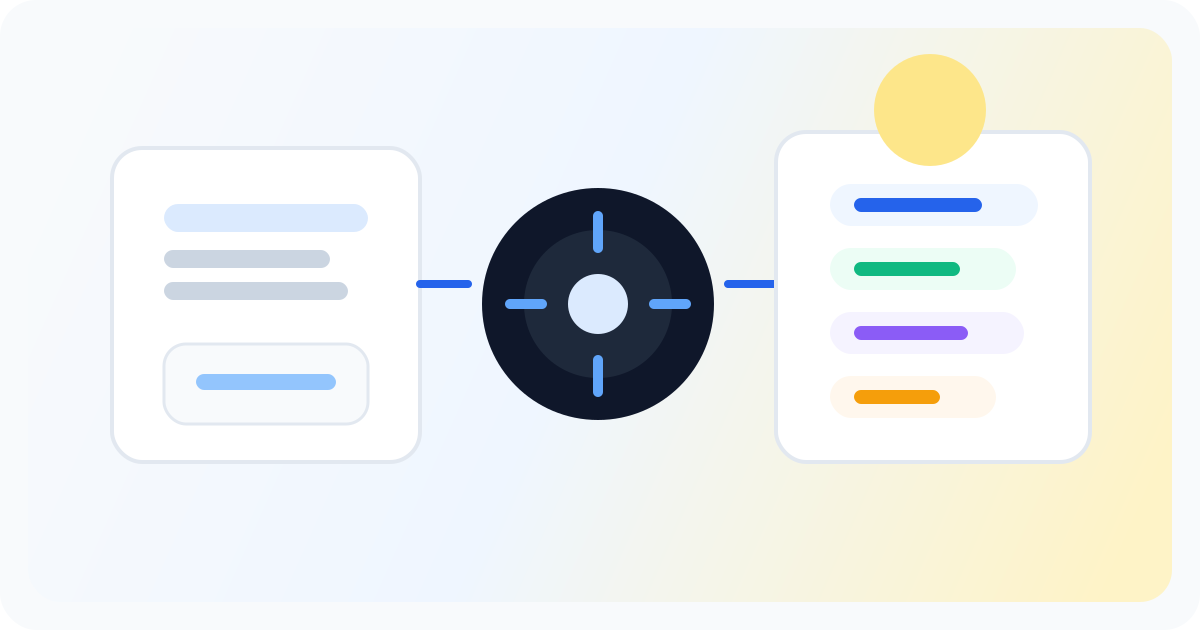
Most social scheduling tools are built queue-first—fill the calendar, then post. Newsletter-first repurposing flips that logic. Instead of starting from prompts or a blank content calendar, you start from the newsletter you've already written. That single shift changes what gets repurposed, how it sounds, and how much time the whole workflow takes. The practical difference is simple: when your newsletter is the source, the content going to LinkedIn and X already has your voice, your argument, and your editorial judgment baked in. You're not recreating the wheel for every platform. You're slicing, editing, and scheduling from work you've already done.
- Newsletter-first repurposing uses your written issue as the content source, not a secondary reference.
- Your existing voice and editorial choices carry through to social drafts automatically.
- This fits writers who publish regularly and want promotion that matches their output.
The tool you choose isn't just about features. It's about where your workflow starts—and that starting point determines how much of your newsletter actually survives the journey to social.
What 'starting point' actually means for your workflow
Every social strategy tool assumes you start somewhere. Most LinkedIn tools and broad schedulers are built around a queue-first mindset: you know you need to post three times this week, so you open the tool and create from prompts, templates, or general topics. That's not inherently wrong, but it does mean you're generating content from scratch each time—or pulling from a content calendar that exists separately from your main writing work. Newsletter-first repurposing changes that origin point. When Letterflow starts from your written issue, the drafts it generates carry the argument structure, tone, and specific points you already developed. You're not rebuilding context—you're extracting from work you did. For creators who write weekly or more, that distinction compounds. Your newsletter isn't just what you send to subscribers. It becomes the foundation for your entire promotion week.
Stop writing social posts from scratch
Letterflow turns one newsletter into a week of platform-ready content so your promotion starts with the writing you already trust.
Start free trialEvaluating the two approaches honestly
- Queue-first tools work when you want broad scheduling flexibility and don't have a newsletter driving your content cycle. They're better for multi-source creators or those who prefer to think about social as its own separate track.
- LinkedIn-heavy tools like Taplio are strong if your publishing focus is primarily LinkedIn and you want workflow features built around that platform. They're less oriented toward treating a newsletter as the canonical source.
- Newsletter-first repurposing makes the most sense when your newsletter is already your primary publishing cadence. If you're writing weekly or more, your issue contains the substance—and the question becomes whether your social tool honors that work or makes you start over.
Bottom line
The starting point isn't a minor implementation detail. It's the structural choice that determines whether your social promotion feels like a continuation of your writing or a separate obligation. For newsletter writers who are already doing the work, newsletter-first repurposing means the promotion week builds from the issue rather than competing with it. If your newsletter isn't the center of your publishing yet, a queue-first or LinkedIn-first tool may serve you better right now. But if you're writing consistently and want your promotion to match that cadence, the source question is worth getting right.