Strategy

Best Social Media Strategy for Newsletter Writers: Start From the Issue

The most effective social media strategy for newsletter writers begins with your published issue, not a blank compose window. Here's how to repurpose once, distribute everywhere.

L

Letterflow Editorial Team

June 5, 2026 · 4 min read
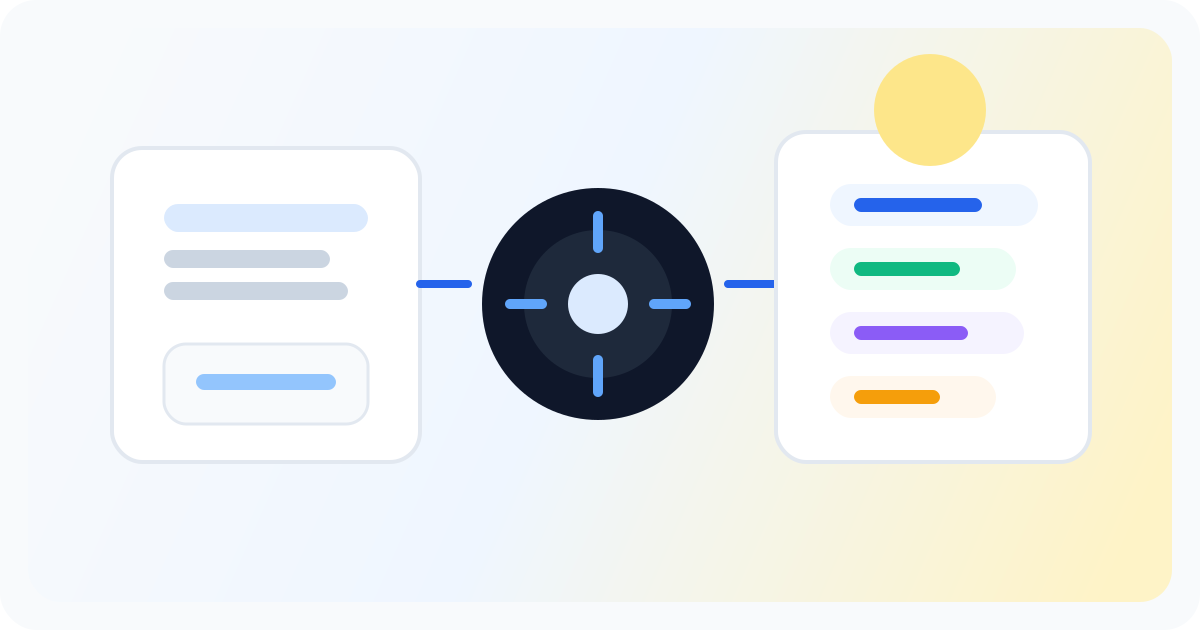
Editorial illustration showing a newsletter distribution strategy workflow across channels.

The short version

If you're publishing a newsletter and struggling to maintain a consistent social media presence, the problem isn't effort—it's origin point. Most writers start social posts from a blank compose window, which means you're inventing content twice. The newsletter-first strategy reverses this: your published issue becomes the source material for everything that follows. Letterflow implements this workflow by letting you paste one newsletter issue and generating ready-to-edit LinkedIn posts, X content, subject line variations, and pull quotes in one pass. The goal isn't to automate your voice away. It's to stop rewriting the same ideas in different boxes.

  • Start from your actual newsletter issue instead of a blank social compose window
  • Generate LinkedIn posts, X threads, subject lines, and quote snippets from one source
  • Train a voice profile so generated posts match how you actually write

Most newsletter writers approach social media backwards. They write a post, then try to remember what they actually said in the newsletter. Start from the issue instead, and your entire week of promotion writes itself.

How the newsletter-first workflow actually works

The practical sequence is straightforward. After your newsletter sends, you open Letterflow, paste the issue content, and run the generation pass. The system produces LinkedIn posts, X posts, subject line candidates, and quote-length snippets—each formatted for their destination platform. You review, edit where needed, and publish directly or queue for later. The key difference from generic social schedulers is that you're not starting from scratch. You're extracting promotional material from content you already wrote, which keeps your social presence connected to your actual message rather than drifting into generic motivation or lifestyle content that doesn't represent what you sent. Training a voice profile improves output quality over time. You can upload past newsletters and social posts to establish your typical sentence length, tone, and phrasing patterns. The generated drafts then reflect how you actually write rather than producing generic AI-sounding posts that don't match your newsletter voice. This matters because audience trust depends on consistency. If your LinkedIn posts sound like a different person than your newsletter, readers notice the disconnect even if they can't name it. The scheduling layer lets you sequence promotion across the week following your send. You might post the main insight the day of, follow up with a supporting quote two days later, and surface a counterpoint or related angle before your next issue. This creates a promotional arc rather than a one-time announcement. Letterflow syncs analytics back into your workspace so you can see which posts drove clicks to the newsletter without switching between platforms.

Stop writing social posts from scratch

Letterflow turns one newsletter into a week of platform-ready content so your promotion starts with the writing you already trust.

Start free trial

Honest fit: when this works and when it doesn't

  • This workflow fits independent newsletter writers and founder-operators promoting a newsletter-led business—creators who publish weekly or more and want promotion that matches their actual content
  • If you're already managing a complex social presence with multi-source content, a broader tool like Taplio might serve you better since it's designed for LinkedIn-heavy creators who don't need newsletter-first repurposing
  • If your primary need is X automation and scheduling, Hypefury offers deeper X-native features than what Letterflow provides for that platform alone
  • Generic social schedulers handle queuing well but don't generate promotional content from your newsletter—they assume you've already written the posts yourself

Bottom line

The newsletter-first social media strategy isn't about working less. It's about working from the right source. When your published issue drives your social promotion, you're not inventing content in parallel. You're extracting maximum value from the work you already did. Letterflow implements this specifically: paste the issue, generate the promotional material, edit and publish, track what performed. For newsletter writers who want social presence without building a separate content creation pipeline, this is the actual fit. Try it if your bottleneck is the blank compose window, not the ideas.

L

Letterflow Editorial Team

Newsletter growth and workflow research

The Letterflow editorial team researches newsletter workflows, creator operations, and repurposing systems so every guide stays practical.

Frequently asked questions

Common questions

Do I need to edit the generated posts before publishing?

Almost certainly yes. Letterflow generates first drafts from your newsletter content, not polished final posts. The editing step is where you adjust tone, trim length, add a timely reference, or sharpen the hook. The workflow saves you the blank-page problem, not the judgment call on final wording.

How does Letterflow compare to just using a social scheduler?

Social schedulers like Buffer or Later handle the queuing and calendar side well but assume you've already written the social posts. Letterflow starts upstream: it generates those posts from your newsletter content. If you enjoy writing individual social posts and just need scheduling, a plain scheduler works fine. If you want the posts themselves to come from what you already published, you need the repurposing layer.

Can I use Letterflow if I only publish monthly?

You can, but the weekly promotional cadence works best for more frequent publishers. Monthly newsletters still benefit from repurposing—you'll just have a four-post promotional arc rather than a continuous flow. The voice profile training still pays off regardless of frequency.