Strategy

Newsletter-First Social Promotion: The Creator's Practical Guide

A no-fluff guide to building a promotion workflow that starts with your newsletter and flows outward to LinkedIn and X. Covers the actual process, real tradeoffs, and when newsletter-first promotion makes sense for your publishing cadence.

L

Letterflow Editorial Team

June 2, 2026 · 4 min read
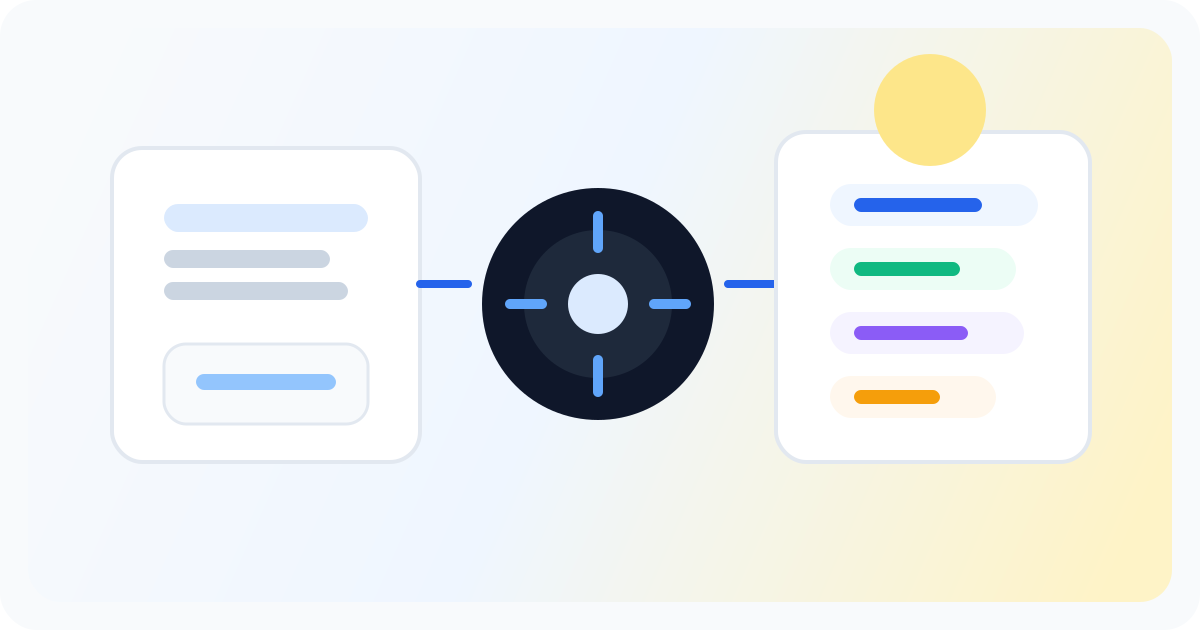
Editorial illustration showing a newsletter distribution strategy workflow across channels.

The short version

Most creators manage two separate content creation streams: the newsletter and the social posts. That split doubles your writing workload and rarely produces your best work on either channel. The newsletter-first approach flips this. Instead of starting from scratch on social, you use what you already wrote in the issue. Letterflow supports this by taking your newsletter draft and generating a set of first-draft social content that you can edit, refine, and schedule without switching tools. The goal isn't to automate your voice—it's to give you a working draft that saves the blank-page problem and gets you to publish-ready faster.

  • Write the newsletter first. Let that draft become the source material for your social promotion.
  • Generate first-draft LinkedIn posts, X posts, subject lines, and pull quotes from one newsletter issue.
  • Edit, publish, and schedule without leaving the workflow—or export to your preferred scheduler.

The newsletter-first approach doesn't ask you to write more. It asks you to write once, then work smarter with what you already created.

How the newsletter-first promotion workflow actually works

The process starts where your best content already starts: with the newsletter. You write the issue. Maybe it's 800 words, maybe 1200. It's done when it's done. Then, instead of opening a blank social compose box and trying to summon a related but separate piece of content from scratch, you feed the newsletter into Letterflow and generate your social content from it. This means your LinkedIn posts and X content are genuinely connected to what your subscribers just read. They're not parallel content that's loosely related to the same theme. They're direct extensions—take one quote from the issue and turn it into a standalone post, pull a supporting data point and build a short thread around it, reframe a conclusion as a contrarian hot take for X. The source material gives you real material to work with. Once Letterflow generates the first drafts, you edit them to match your voice. You can train a voice profile from your past posts so future generations sound more like you. Then you publish and schedule directly through the tool, with analytics syncing back into your workspace so you can see what actually performed without checking two platforms manually.

Stop writing social posts from scratch

Letterflow turns one newsletter into a week of platform-ready content so your promotion starts with the writing you already trust.

Start free trial

When the newsletter-first approach works and when it doesn't

  • It works best when you already have a consistent newsletter publishing rhythm. If you're publishing weekly or biweekly, you have enough source material to keep social promotion active without duplicating your writing effort.
  • It has limits if your newsletter content doesn't naturally translate to social formats. A personal essay about your creative process will repurpose better than a dense technical breakdown that needs significant context to land on social.
  • It requires editing. The generated drafts are starting points, not final posts. If you're looking for one-click publishing with zero review, this approach will disappoint. If you want a faster path to publish-ready content that sounds like you, the workflow pays off quickly.
  • It's not the right fit for every creator. If social is your primary channel and the newsletter is secondary, a queue-first scheduling tool may serve you better. But if your newsletter is the anchor of your publishing schedule, this workflow keeps your promotion aligned with your core content.

Bottom line

Newsletter-first social promotion isn't about doing less. It's about doing the work once, in the place where you do it best, then extending it thoughtfully rather than starting from scratch every time you sit down to promote. The approach works because it keeps your writing and your promotion in the same creative orbit. You write the newsletter, you generate the social content from it, you edit, you publish, you move on. Letterflow's fit here is specific: it's a repurposing and scheduling tool for newsletter-first creators who want their social promotion to flow from what they already wrote. If that describes your workflow, the time savings are real. If your publishing starts somewhere else, look for the tool that matches where you actually start.

L

Letterflow Editorial Team

Newsletter growth and workflow research

The Letterflow editorial team researches newsletter workflows, creator operations, and repurposing systems so every guide stays practical.

Frequently asked questions

Common questions

What's the main advantage of a newsletter-first social promotion workflow?

The main advantage is avoiding duplicate effort. Instead of writing your newsletter and then writing separate social posts from scratch, you use your newsletter draft as the source material for your promotion. This keeps your social content genuinely connected to what your subscribers just read, and it saves the time of staring at a blank compose box every time you need to promote.

Does using Letterflow for social promotion require a lot of editing after generation?

Yes. The generated drafts are first-draft starting points, not polished final posts. You'll want to review them for tone, add any platform-specific context, and make sure they sound like you. The voice profile feature helps future drafts align more closely with your style, but editing is still part of the workflow. If you're looking for fully automated one-click posting, this isn't that tool.

How often should I publish a newsletter to make this workflow worthwhile?

Weekly or biweekly publishing tends to work best. That cadence gives you enough fresh source material to keep social promotion active without creating gaps between issues. If you're publishing monthly, you can still make the workflow work, but you'll need additional non-newsletter content to maintain a consistent social presence between sends.

What if my newsletter content doesn't naturally repurpose into social posts?

Some newsletter content repurposes better than others. Personal essays, strong opinions, specific examples, and data points translate well to social formats. Dense technical content or deeply contextual pieces may need more editing or reframing to work on LinkedIn and X. The newsletter-first approach works best when your newsletter content has standalone points that can carry a short post without requiring the full reader context.