How to Schedule Newsletter-Derived Posts for Consistent Publishing
If you already wrote the newsletter, the job is not to invent more content. The job is to turn that finished issue into a steady stream of LinkedIn and X posts that can actually be scheduled. This draft explains a newsletter-first workflow for creators who want consistent publishing without treating social as a second writing job.
Letterflow Editorial Team
August 12, 2026 · 4 min read
The short version
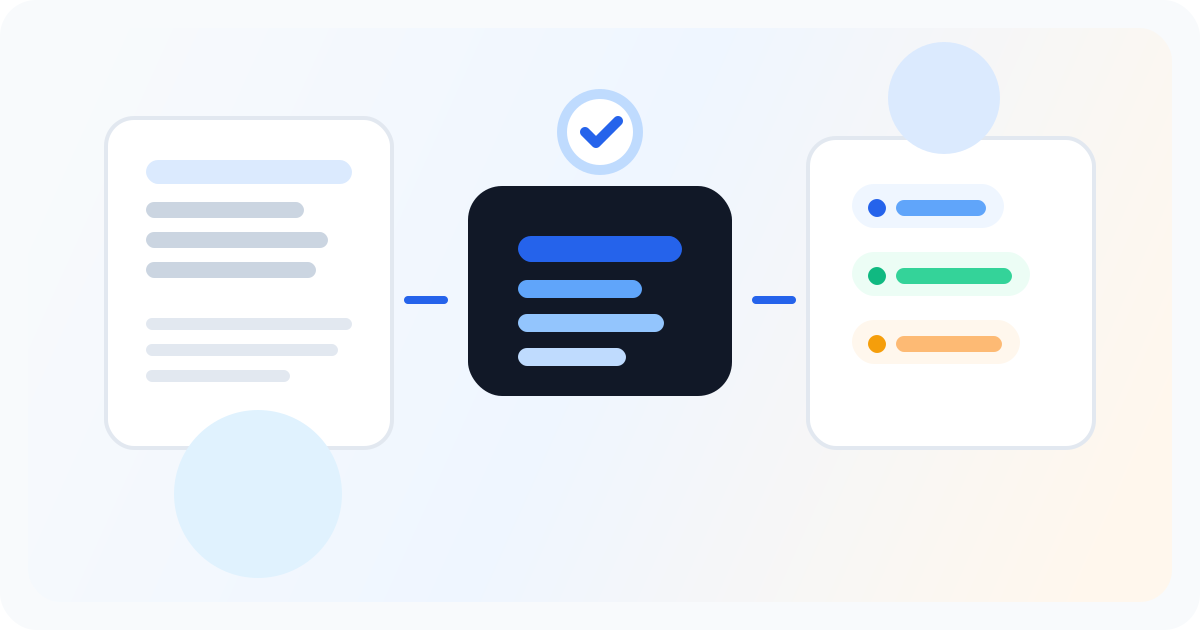
The cleanest way to schedule newsletter-derived posts is to stop treating social as separate content. If you already wrote the newsletter, that issue should become the source for your LinkedIn and X promotion. That is the workflow Letterflow is built for: start with the real newsletter, generate post drafts, make the edits you actually want, and then schedule them in the same place.
- Start from the published issue, not a blank prompt or empty calendar.
- Use the newsletter as the source for LinkedIn posts, X posts, subject lines, and quote snippets.
- Schedule after editing so the queue reflects the actual story you already wrote.
A finished newsletter is the source material. The schedule comes after, not before.
Tradeoffs: when this workflow is strong, and when it is the wrong fit
- Letterflow is a strong fit when you already publish a newsletter and want the promotion work to come out of that issue instead of a separate content calendar.
- It is especially useful if you want LinkedIn and X drafts that can be edited, regenerated, published, and scheduled without moving between a writing tool and a scheduler.
- Training a voice profile from past posts and newsletters matters when your audience expects the repurposed posts to sound like you, not like a template.
- It is not the best answer if your main job is broad social scheduling across many content sources, or if you need a queue-first tool that starts from social planning rather than newsletter repurposing.
Bottom line
The honest recommendation is simple: use Letterflow when the newsletter is the source and social is the distribution layer. If you already wrote the issue and your next task is to turn it into consistent LinkedIn and X publishing, the workflow lines up well. You get repurposed drafts, editing control, voice matching, and scheduling in one place, which is exactly what a newsletter-first creator needs. If your process starts somewhere else, the fit weakens. A LinkedIn-heavy tool or a broader social scheduler may make more sense if newsletter repurposing is not the center of the job. Letterflow is worth it when you want to promote the issue you already created, stay close to the original writing, and keep the schedule moving without rebuilding content from scratch every week.